Tortuga Travel Backpack Review
The bag that made carry-on-only travel practical for people who aren't backpackers. Clamshell opening, suitcase-grade organisation, and a harness that carries real weight without punishing your shoulders.
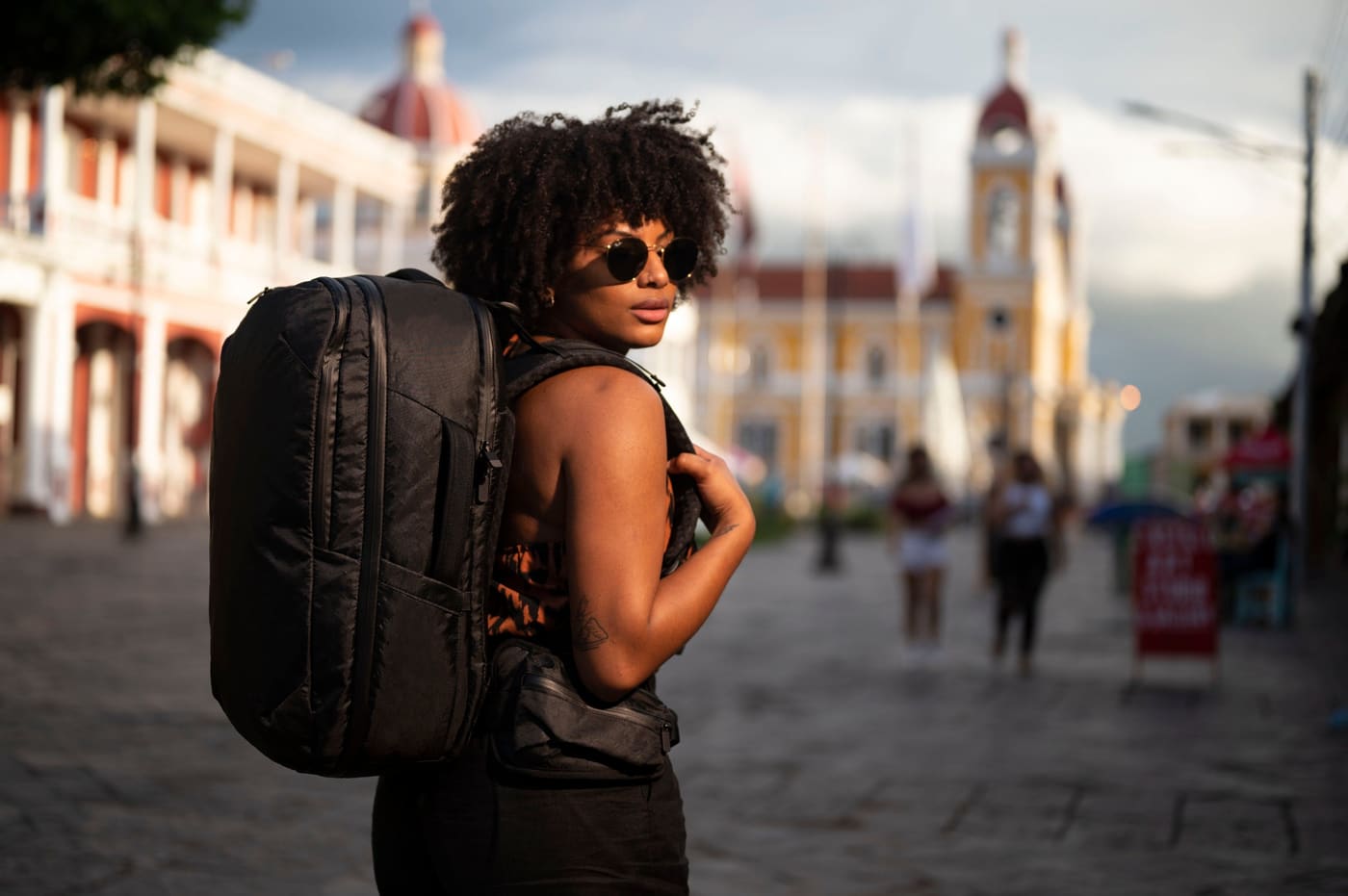
- Type
- Carry-on travel backpack
- Opening
- Full clamshell
- Sizing
- Designed to carry-on dimensions
Reasons to buy
- Full clamshell opening — packs like a suitcase, carries like a pack
- Harness handles a loaded bag genuinely well
- Maximised carry-on dimensions without exceeding them
- Built for years of use, not a season
Reasons to avoid
- Expensive against conventional carry-on luggage
- Weight adds up quickly because the capacity invites it
- Boxy silhouette isn't discreet
Rolling luggage dies on cobblestones, and hiking packs are miserable in cities — top-loading tubes that turn finding a shirt into an excavation. Tortuga's whole brand lives in the gap between them: a bag sized exactly to carry-on limits that opens flat like a suitcase and carries like a proper pack. It's the design that made carry-on-only travel practical for people who don't identify as backpackers and never intend to.
The clamshell is the feature that changes behaviour. Packing cubes go in and come out without excavation, and finding a specific shirt doesn't mean unpacking the bag onto a hostel bunk. Combined with organisation that treats a laptop, documents and clothing as separate problems, it turns living out of a bag into something tolerable for weeks. The habit it builds is the real product: because everything has an address, repacking on a multi-stop trip stops being a chore and becomes a quick routine you do without thinking.
The harness deserves specific credit. A full carry-on's worth of weight sits badly on most travel packs; Tortuga's suspension moves the load onto the hips the way a hiking pack does, which is the difference between a twenty-minute walk from the station and a taxi you didn't want to pay for. If you've only ever carried duffel-style travel bags on a shoulder strap, the first properly fitted hipbelt is a small revelation — take the time to adjust it to your body rather than wearing it straight out of the box.
Who it's for: the traveller who has decided — or wants to decide — that checked luggage is over. That decision is bigger than the bag; it's a packing philosophy, and this is the container that rewards it best. Who it isn't for: anyone who checks a bag anyway, travels mostly by car, or wants something discreet. The boxy silhouette is the price of maximised capacity, and it announces itself in any room it enters.
The buying trap is the capacity itself. A bag built to the outer edge of carry-on allowances invites you to fill it, and a filled bag at this size is heavier than most people expect to carry through a tight connection. The discipline that makes it shine is packing it comfortably under full — cubes make that easy to enforce — and letting the compression handle the rest. Check the cabin-bag rules for the specific airlines you fly, too: 'carry-on sized' is a moving target across carriers, and budget airlines are where it moves most.
Priced against conventional luggage it looks expensive, but for anyone flying carry-on-only more than a few times a year it earns the money back in checked-bag fees alone — and in every bag the airline never got the chance to lose. This is one of the rare categories where the best-known name is also the sensible default: start here, and only look elsewhere if the aesthetic or the price rules it out. If you check bags anyway, buy a suitcase and skip the whole question.
How we tested
The Tortuga Travel Backpack was scored against the same written rubric we apply to every Luggage & Carry-On product — real-world performance, build quality, ease of use, upkeep and value. Full protocol on our How We Test page.